Why Some Streets Make Us Slow Down
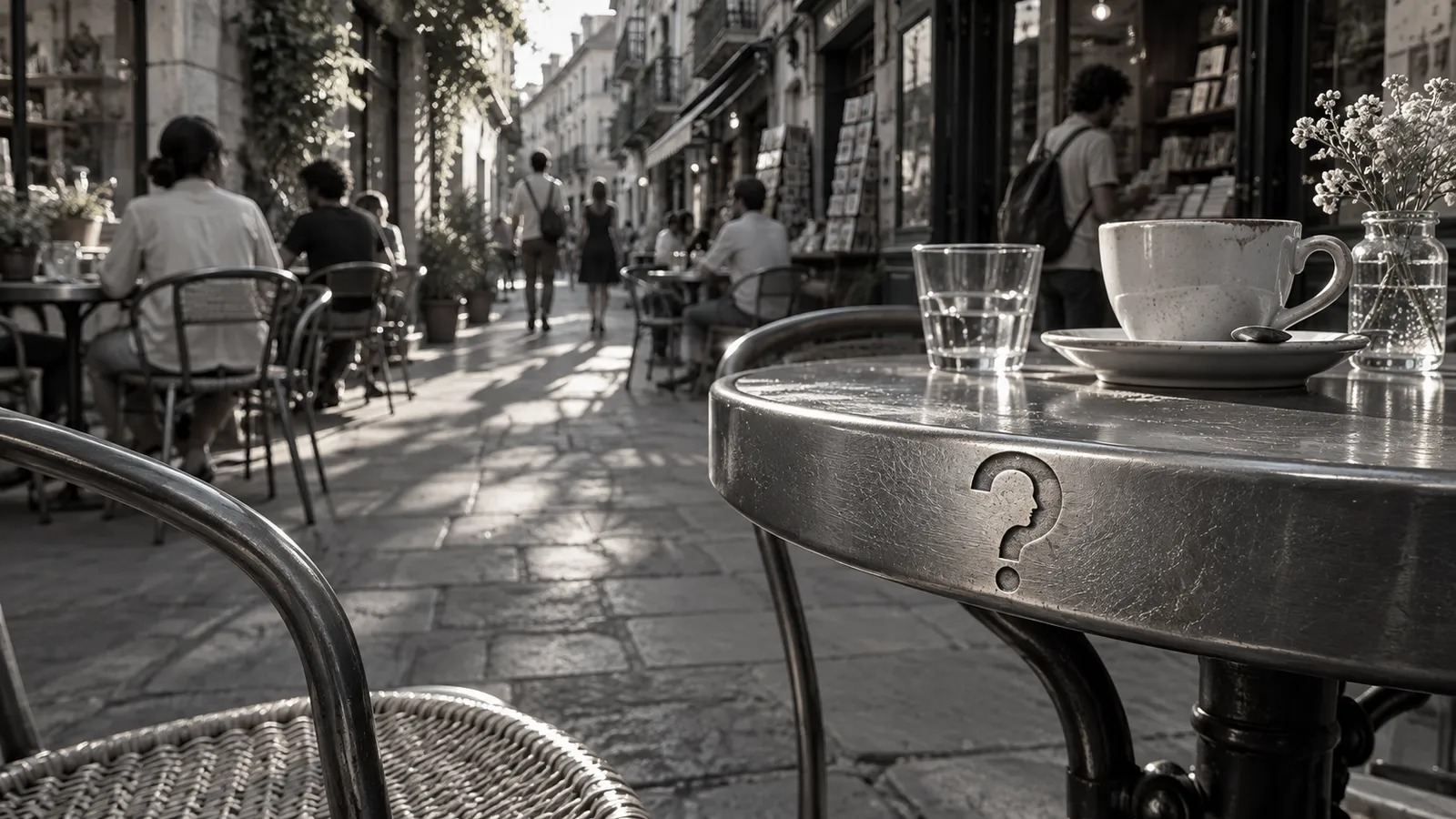
The pace of a street is set at eye level. Open, varied ground floors slow people down, and seats, shelter and familiar businesses give them a reason to stay.
Why do people linger on some streets?
People linger where the street edge gives them reasons to slow down and somewhere to stay. Active frontage, a ground floor of frequent doors, windows and varied fronts, slows walkers and multiplies stops, while seating, shelter, wider pavements and businesses that act as community places turn a pause into a stay.
Key takeaways
- In observations reported by Jan Gehl and colleagues, people walked more slowly and stopped more in front of active facades, where stops and other activities were about seven times as frequent.
- Students timed along a city route walked faster where there was no greenery, more traffic, more noise and more people, and slower where they felt better (Fránek, 2013).
- Varied facades and lower buildings raised how restorative a street was judged to be, without making people like it more (Lindal and Hartig, 2013).
- Seating, businesses that work as community places, personalised storefronts and wider pavements were most tied to people staying and talking on three commercial streets (Mehta, 2007).
- Businesses used as third places were distinctive and open to the street, and seating and shelter mattered most for sociability (Mehta and Bosson, 2010).
Walk the length of almost any high street and the pace changes without anyone deciding to change it.
People stride past a blank wall or a car park entrance, then slow and sometimes stop where the ground floor breaks into doors, windows and displays. Planners and urban designers call that busy edge active frontage, and it is where the answer to why people linger on some streets begins.
The pavement edge sets the pace
Pace is the first thing a street edge changes. Observations reported by the architect Jan Gehl and colleagues compared stretches lined with active facades, with frequent doors and openings, against passive ones made of closed or uniform fronts. In front of the active facades people walked more slowly and more of them stopped, and stops and other activities were about seven times as frequent. The authors' wider point is that buildings have grown large while the people passing them keep the same small stature and slow pace, and the ground floor is where the two scales meet.
A slower walk also says something about how a place feels. In a set of walking studies in a Czech city, Marek Fránek timed students along a route that passed through stretches with different amounts of greenery, traffic, noise and crowding. They walked faster where there was no greenery, more traffic, more perceived noise, more people and less open space. A fourth study asked how each stretch made them feel, and where people reported more pleasant emotions and a stronger sense of restoration, they walked more slowly.
Walking speed can therefore work as a rough gauge of comfort. A street that hurries people along often offers little to look at or to recover in, and a street that slows them is often one they find more pleasant to be in. Active frontage is one way a street can move that gauge, because it works at eye level, the band of the street that walkers actually look at, rather than in the upper storeys that few of them notice.
Why does active frontage hold the eye?
In Happy City, this edge carries part of Charles Montgomery's case. He argues that streets with many doors, windows, varied facades and mixed uses slow walkers and invite them to pause, while long stretches of blank or uniform frontage speed people up and leave them in a lower mood, and he draws on Gehl's facade observations for the point. His wider thesis is that the shape of a city shapes how its people feel, which turns active frontage from a matter of trade into a matter of how a street treats the people on it.
Variety along an active frontage does part of that work. Pall Lindal and Terry Hartig showed adults in Iceland computer-built residential streets that differed in how varied the facades and rooflines were and in how tall the buildings stood, from one to three storeys, and asked them to imagine walking there after a tiring day. Greater architectural variation and lower buildings both raised how restorative the street was judged to be. Variation worked through fascination and a sense of being away from routine, two ideas drawn from attention restoration theory, while taller buildings weakened the sense of being away.
One detail sharpens the point. Variation did not make people like the streets more. It changed how much a street seemed to offer a tired mind, which is closer to the reason someone slows down than to whether they would choose to live there. A varied front holds attention without demanding it, and that gentle hold is what an active frontage supplies to a walker with nowhere urgent to be.
Reid Ewing and Susan Handy used ratings from an expert panel to translate five subjective qualities linked to walking into physical features of streets and their edges that can be measured on site. Once the feel of an active frontage is broken into countable features, a hope about street life becomes something a design code can ask for.
Seats, shelter and familiar businesses
Slowing down is the start of lingering, and staying needs somewhere to stay. Across three neighbourhood commercial streets, Vikas Mehta tested eleven land use and physical features against what people did while stationary, lingering or talking. People responded about equally to the social, land use and physical sides of the street. The features most strongly tied to staying were seating, whether put out by a business or by the public authority, businesses that worked as community places, storefronts personalised by their owners and wider pavements.
Each of those features does a different job. A seat turns a pause into a stay. A wide pavement lets someone stand still without blocking the flow. A personalised storefront is a richer form of active frontage, one that signals a particular owner and invites a second look. A business that works as a community place supplies the reason to come back, so that lingering becomes a habit of the street rather than an accident of one afternoon.
Mehta later took the last of those further with Jennifer Bosson, using Ray Oldenburg's idea of third places, the informal settings outside home and work where people meet friends, neighbours and strangers. On Main Streets in two cities and one town in Massachusetts, visual surveys and interviews showed that the businesses people used as third places stood out for being distinctive, recognisable and open to the street. Seating and shelter, though, came out as the most important design features for sociability. A café with tables on the pavement can be a third place and an active frontage at once, and the murmur of other people discussed in Why We Work Better in Cafés is part of its offer.
Settled people are themselves a draw. Montgomery repeats Gehl's point that people are drawn by the sight of other people doing things, so a seated, talking group becomes part of the frontage itself. The inference traced in Does a Long Queue Make People Want In, where a crowd is taken as a sign that a place is worth trying, works on a busy pavement too.
Which part of the street does what?
| Street feature | What it was linked to | Study |
|---|---|---|
| Frequent doors and openings at ground level | Slower walking and more stops | Gehl and colleagues |
| Greenery, open space, less traffic and noise | Slower walking and more pleasant feelings | Fránek |
| Varied facades and lower buildings | Higher judged restoration, not higher liking | Lindal and Hartig |
| Seating from businesses or the authority | More stationary and social activity | Mehta |
| Personalised storefronts and wider pavements | More stationary and social activity | Mehta |
| Distinctive businesses open to the street, with seats and shelter | Use as third places and more sociability | Mehta and Bosson |
The studies used different streets, measures and methods, from timed walks and image ratings to counts of people sitting and talking. Lined up by street feature, though, they show that no single feature carries the effect alone: pace, comfort and staying each answer to a different part of the street.
For anyone running a ground floor, the sequence matters more than any single item. The chain may carry on through the door, as the link between a slower pace and spending in Why We Buy More When the Music Is Slow suggests. A street that people linger on is built at the scale of the person walking past it. Its front slows them, a seat lets them stop and a business gives them a reason to return.
Common questions
Why do people linger on some streets?
People linger where the street edge gives them reasons to slow down and somewhere to stay. Active frontage, with frequent doors, windows and varied fronts, slows walkers and multiplies stops, while seating, shelter, wider pavements and businesses that act as community places turn a pause into a stay. Greenery, less traffic and less noise also go with a slower, more pleasant walk.
What is active frontage?
Active frontage is a ground floor with frequent doors, windows, displays and uses facing the pavement, as opposed to blank walls, closed fronts or long uniform facades. In observations reported by Jan Gehl and colleagues, people walked more slowly and stopped more often in front of active facades, where stops and other activities were about seven times as frequent.
Does street seating help people linger?
On three neighbourhood commercial streets studied by Vikas Mehta, seating provided by businesses or the public authority was among the features most strongly tied to stationary, lingering and social activity. A later study of Main Streets found that seating and shelter were the most important design features for sociability at businesses people used as third places.
Sources
Montgomery, C. Happy City. Seed book.
Gehl, J., Kaefer, L. J., & Reigstad, S. (2006). Close encounters with buildings. Urban Design International, 11(1), 29-47. doi:10.1057/palgrave.udi.9000162 https://doi.org/10.1057/palgrave.udi.9000162
Fránek, M. (2013). Environmental factors influencing pedestrian walking speed. Perceptual and Motor Skills, 116(3), 992-1019. doi:10.2466/06.50.PMS.116.3.992-1019 https://doi.org/10.2466/06.50.PMS.116.3.992-1019
Lindal, P. J., & Hartig, T. (2013). Architectural variation, building height, and the restorative quality of urban residential streetscapes. Journal of Environmental Psychology, 33, 26-36. doi:10.1016/j.jenvp.2012.09.003 https://doi.org/10.1016/j.jenvp.2012.09.003
Ewing, R., & Handy, S. (2009). Measuring the unmeasurable: Urban design qualities related to walkability. Journal of Urban Design, 14(1), 65-84. doi:10.1080/13574800802451155 https://doi.org/10.1080/13574800802451155
Mehta, V. (2007). Lively streets: Determining environmental characteristics to support social behavior. Journal of Planning Education and Research, 27(2), 165-187. doi:10.1177/0739456X07307947 https://doi.org/10.1177/0739456X07307947
Mehta, V., & Bosson, J. K. (2010). Third places and the social life of streets. Environment and Behavior, 42(6), 779-805. doi:10.1177/0013916509344677 https://doi.org/10.1177/0013916509344677
Related concepts
People
More articles
- Why Made In Still Matters
A place name on a label can lift what people will pay. Whether it does depends on who is buying, what else they can see, and whether they notice the label at all.
- Why We Want the Food We Banned
One body of research says a banned food grows louder. Another says it slowly goes quiet. The two are measuring different weeks of the same ban.
- Why We Hear Freshness
A bite is a burst of tiny cracks, and the ear reads them. Change the noise and the same crisp seems fresher or staler, while the food itself stays exactly as it was.
- Why Ads Forget the Over-Fifties
Older people feel younger than their years and respond warmly to adverts that speak to what they value. Two accounts explain why they still appear less often on screen.