Morris Holbrook
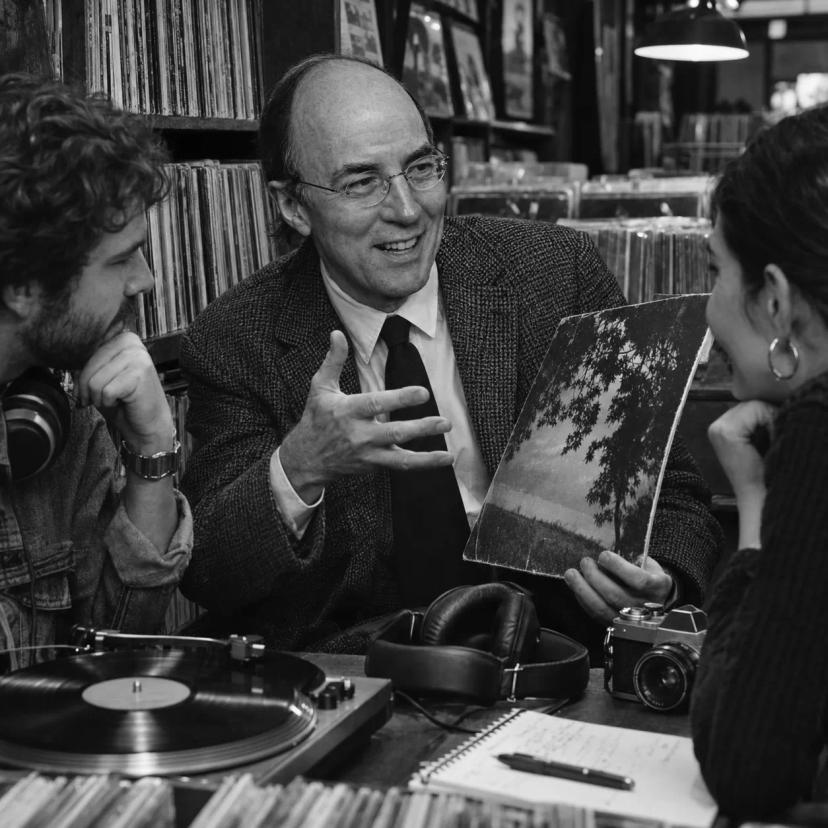
Morris Holbrook is a marketing scholar at Columbia University and first author, with Elizabeth Hirschman, of the 1982 Journal of Consumer Research paper on the experiential aspects of consumption. That paper set out an experiential view of consumption, which stresses fantasies, feelings and fun alongside the information processing account that then dominated the field. He later became known for work on consumer value, emotion in advertising and nostalgia.
Who they are
Holbrook is an American marketing academic. He is listed at Columbia University, and his bibliography runs across more than three hundred works on consumer experience, aesthetics, value and emotion. His writing often uses personal and photographic material alongside conventional research methods, which makes him an unusual figure in a field built on surveys and experiments.
On this site he appears for the 1982 paper, which is the starting point for the experiential view of consumption. The article on consumer psychology uses it to show how the field widened from rational choice to the feelings and meanings that attach to buying and using things.
Main work
The 1982 paper was published in the Journal of Consumer Research as The Experiential Aspects of Consumption: Consumer Fantasies, Feelings, and Fun. In the same year the two authors published Hedonic Consumption: Emerging Concepts, Methods and Propositions in the Journal of Marketing, which makes the parallel case in more detail.
His later work on emotion includes The Varieties of Consumption Experience: Comparing Two Typologies of Emotion in Consumer Behavior (Journal of Consumer Research, 1986, with William Havlena) and Assessing the Role of Emotions as Mediators of Consumer Responses to Advertising (Journal of Consumer Research, 1987, with Rajeev Batra). With Thomas Olney and Batra he wrote on how ad content, emotions and attitude toward the ad affect viewing time (Journal of Consumer Research, 1991). Nostalgia and Consumption Preferences: Some Emerging Patterns of Consumer Tastes (Journal of Consumer Research, 1993) deals with taste and the past.
He is also a leading name in the study of consumer value. The Nature of Customer Value: An Axiology of Services in the Consumption Experience (1994) and the edited volume Consumer Value: A Framework for Analysis and Research (1999), which opens with his Introduction to consumer value, set out a typology of value. The Chain of Effects from Brand Trust and Brand Affect to Brand Performance (Journal of Marketing, 2001, with Arjun Chaudhuri) examines brand loyalty. Consumption experience, customer value, and subjective personal introspection: An illustrative photographic essay (Journal of Business Research, 2006) shows his introspective method.
Key papers
Holbrook, M. B., & Hirschman, E. C. (1982). The experiential aspects of consumption: Consumer fantasies, feelings, and fun. Journal of Consumer Research, 9(2), 132-140.
Holbrook and Hirschman argue that the experiential aspects of consumption deserve recognition. They build a general framework of consumer behaviour variables and use it to contrast the prevailing information processing model with an experiential view, which stresses the symbolic, hedonic and aesthetic nature of consumption and its orientation to fantasies, feelings and fun.
Hirschman, E. C., & Holbrook, M. B. (1982). Hedonic consumption: Emerging concepts, methods and propositions. Journal of Marketing.
Holbrook, M. B. (1993). Nostalgia and consumption preferences: Some emerging patterns of consumer tastes. Journal of Consumer Research.
Key ideas
Experiential view of consumption: buying and using things can be pursued for fantasies, feelings and fun, which the information processing model leaves out.
Consumer value: his later framework treats value as something found in the consumption experience and not only in the product.
Sources
- Holbrook, M. B., & Hirschman, E. C. (1982). The experiential aspects of consumption: Consumer fantasies, feelings, and fun. Journal of Consumer Research, 9(2), 132-140.
Studies on this site by Holbrook
- The experiential aspects of consumption: Consumer fantasies, feelings, and fun
Holbrook (1982) · Journal of Consumer Research
- Some exploratory findings on the development of musical tastes
Holbrook (1989) · Journal of Consumer Research
Articles that cite Morris Holbrook
- Why We Love the Music of Our Teens
What studies of chart songs say about the age when music sticks, whether liking and memory peak together, and why a parents' playlist can count too.
- What Is Consumer Psychology?
Consumer psychology studies the mind of the buyer. Here is what it covers, how it differs from consumer behaviour, where it came from and how researchers test it.
Concepts on this site
- Experiential View of Consumption
- Song-Specific Age
The age a listener was when a given song was popular.