Terry Childers
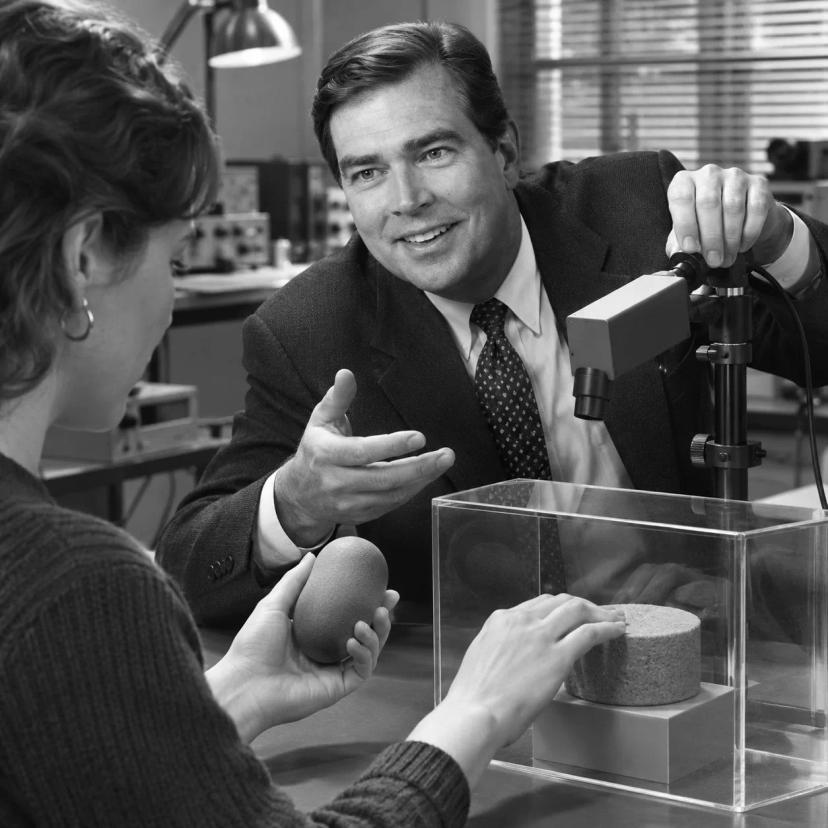
Terry L. Childers is a marketing researcher at Iowa State University whose work concerns consumer behavior and retail. He is co-author, with Joann Peck, of To have and to hold: The influence of haptic information on product judgments, published in the Journal of Marketing in 2003. This site cites it in its article on how people decide what to buy online.
Who he is
Public records list Childers at Iowa State University, with about 78 indexed works and nearly twelve thousand citations. The topics attached to his record are consumer behavior and marketing influence, retail behavior, pricing and advertising strategy. His co-author on the haptic paper, Joann Peck, has a page on this site.
Main work
The 2003 paper asked what touch contributes to a buyer's judgement of a product, a question that became pressing as shopping moved online and shoppers lost the chance to handle goods. Peck and Childers proposed a framework for when touch information matters and tested it in experiments.
Key papers
Peck, J., & Childers, T. L. (2003). To have and to hold: The influence of haptic information on product judgments. Journal of Marketing, 67(2), 35-48.
The framework holds that the usefulness of touch information, such as texture, hardness, temperature and weight, varies by product, consumer and situation. Two experiments show that barriers to touch, such as a display case, reduce confidence and increase frustration, especially for consumers who want to touch. Written descriptions and visual images partly substitute for touch for some product types, and the findings extend to internet and other nonstore retailing.
Key ideas
Haptic information: what touch tells a buyer about a product, such as texture, hardness, temperature and weight. See Haptic Information.
Need for touch: people differ in how much they want to handle a product before judging it, and the cost of being unable to touch falls hardest on those who want to.
Substitution: descriptions and images can fill part of the gap for some products, which is the case for design choices in online shops where a shopper cannot hold the item.
Where he appears on this site
Childers appears in How People Decide What to Buy Online. The related concept is haptic information.
Sources
- Terry L. Childers is co-author, with Joann Peck, of To have and to hold: The influence of haptic information on product judgments, published in the Journal of Marketing in 2003.
- OpenAlex author record for Terry L. Childers, consulted 5 November 2026.
Studies on this site by Childers
- The influence of familial and peer-based reference groups on consumer decisions
Childers (1992) · Journal of Consumer Research
- All dressed up with something to say: Effects of typeface semantic associations on brand perceptions and consumer memory
Childers (2002) · Journal of Consumer Psychology
Articles that cite Terry Childers
- The Font Is Talking
Letters carry traits of their own before anyone reads the word they spell. Whether those traits help a brand depends on what the brand sells.
- Why We Buy the Brands Our Parents Bought
A parent's shopping habit is a brand's first market. Children learn brands at home before they learn prices, and for everyday goods the family choice travels well into adult life.
- Why Touching It Makes Us Want It
What experiments say about touch, confidence and ownership, and the kinds of product where feel adds little.
- Why are adults buying squishy fidget toys?
What research on touch, ownership, fiddling and adult playfulness says about the soft toys now common on adult desks.
- How People Decide What to Buy Online
A purchase on a screen is a string of small decisions. Six studies and one book show where each step helps the shopper and where it runs out.
Concepts on this site
- Haptic Information
What touch tells a buyer about a product, such as texture, hardness, temperature and weight.
- Intergenerational Influence
Intergenerational influence is the passing of brand preferences, beliefs and buying habits from one generation of a family to the next. The research reviewed here finds it persistent and powerful…
- Need for Touch
Individual differences in how much people prefer to take in information through touch.
- Typeface Personality
Typeface personality is the set of traits people read into the shape of letters, separate from what the letters spell. The same word set in two faces can suggest two different brands, and research…