Why are adults buying squishy fidget toys?
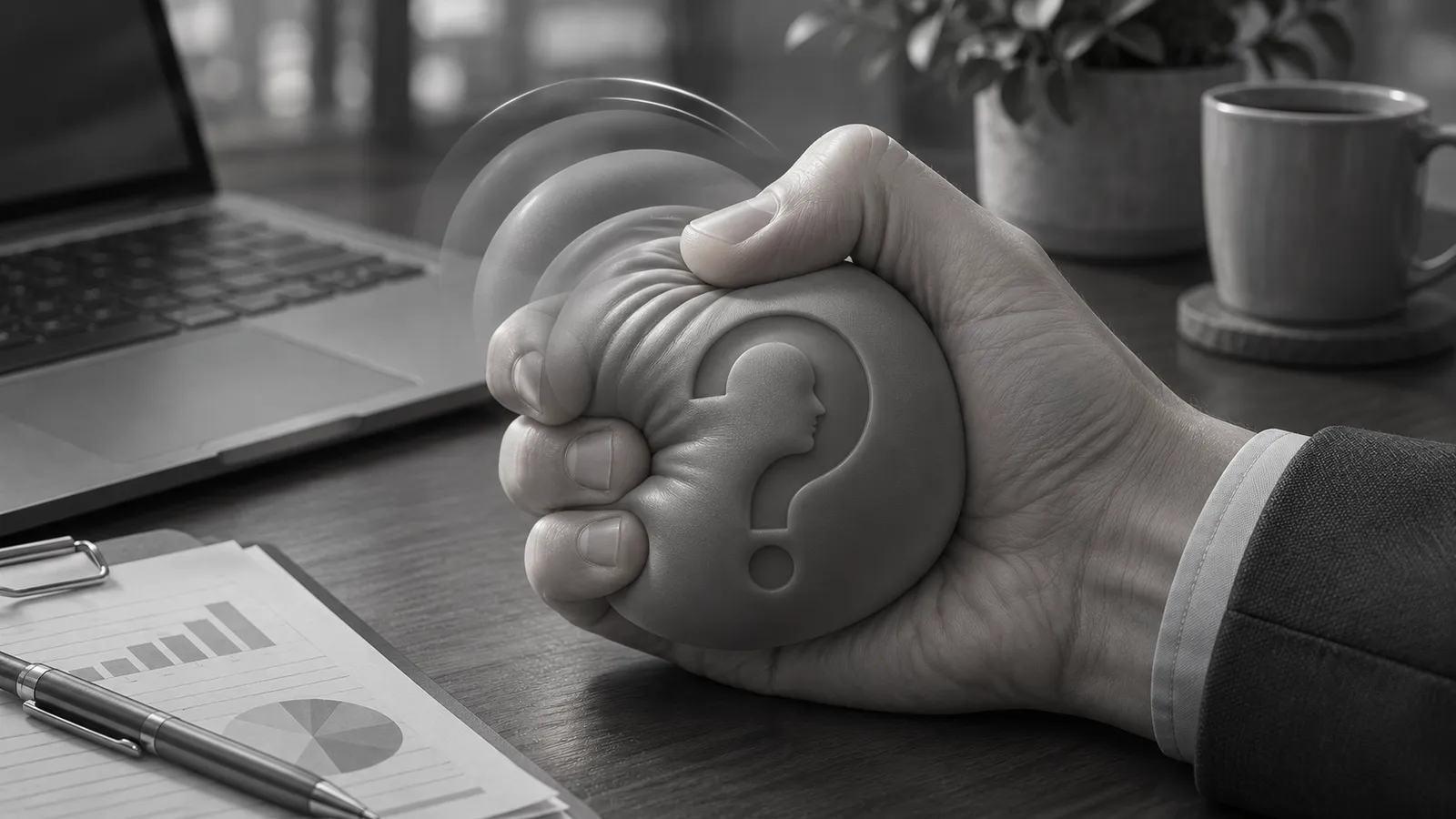
What research on touch, ownership, fiddling and adult playfulness says about the soft toys now common on adult desks.
Answer to the question
Why are adults buying squishy fidget toys?
Adults buy squishy fidget toys because a soft object that yields to the hand and springs back offers touch enjoyed for its own sake, a quick sense of ownership and a small private form of play. Research on touch, ownership and adult playfulness explains each pull, though none of it was run on these toys.
Key takeaways
- Ingrid Fetell Lee's Joyful argues that play is done for its own sake and that round, soft and bright forms carry cues that invite play, which a soft palm-sized toy offers in one object.
- Peck and Childers built a 12-item scale in 2003 with two dimensions of touch preference: instrumental, tied to a purpose, and autotelic, enjoyed for the experience itself.
- Peck and Shu reported in 2009 that touching an object, or imagery that encourages touch, raises the sense that the object is yours, and that valuation depends on that sense and on how pleasant the touch felt.
- Karlesky and Isbister proposed fidget widgets in 2014 as low-stakes physical objects in the margin of digital work; a 2023 exploratory study with designers reported initial findings.
- In an online study of 268 adults, humour, appreciation of beauty and excellence, creativity and teamwork were among the strengths that best predicted playfulness (Proyer and Ruch, 2011).
At two on a Tuesday afternoon, a woman in an open-plan office reaches into her desk drawer and takes out one of her squishy fidget toys, a soft, palm-sized peach. She presses it flat with her thumb, watches it rise slowly back to its shape, and goes on listening while a colleague talks through a spreadsheet. Nobody remarks on it. A similar toy sits beside a laptop in a university library, another rides in the door pocket of a parked car, and a fourth hangs from a bag strap on a commuter train.
What draws adults to squishy fidget toys?
The object is simple: a soft, compressible shape that gives under pressure and returns, made to be handled while attention is somewhere else. Ingrid Fetell Lee, a designer, makes the case in Joyful that ordinary objects can carry an invitation to play in their shape. She describes play cues as signals, such as a dog's play bow or a mischievous smile, that mark a safe zone with different rules, and she extends the idea to objects and spaces.
She argues that play is done for its own sake, and that round, soft and bright forms signal that nothing serious is at stake. Squishy fidget toys offer all of those cues in a form small enough to close a hand around, so it is no surprise that they appeal to grown-ups as readily as to children.
Four lines of work sit behind the pull of squishy fidget toys, each explaining a different part of it.
| What the toy offers | What it connects to | Work |
|---|---|---|
| A soft shape that is pleasant to handle | Touch enjoyed for its own sake | Peck and Childers |
| A thing that is held | A sense that the object is yours | Peck and Shu, 2009 |
| A place beside the task, not inside it | Secondary interaction in the desk margin | Karlesky and Isbister, 2014 |
| A small private game | Adult playfulness | Proyer and Ruch, 2011 |
Is touching an object a pleasure in itself?
Some touching gathers information, as when a shopper presses a cushion to judge how it will feel at home. Other touching is simply enjoyed. Joann Peck and Terry Childers built a twelve-item scale to measure how much people prefer to take in information through touch, and the scale has two dimensions. One is instrumental, tied to a purpose such as judging a product. The other is autotelic, meaning touch enjoyed for the experience itself. Their tests supported the scale's structure, reliability and validity, and showed that people differ in how readily they draw on what their hands tell them.
A shop can supply the instrumental kind of touch with a display model. The autotelic kind is what a toy bought for the hand supplies, at home or at work.
Squishy fidget toys have nothing to judge. Nobody squeezes one to learn whether it will suit the sofa. A soft toy offers the autotelic kind of touch on demand, with no purchase decision attached and no information to extract, which fits the idea that squishy fidget toys are bought for the hand and not for any task.
Touch also changes what an object means to the person holding it. In a 2009 paper, Peck and Suzanne Shu reported that touching an object raises the sense that it is yours, and that imagery encouraging touch can raise the same sense. How much people then value the object depends on that sense of ownership and on whether the touch felt pleasant or unpleasant.
For a soft toy the touch is meant to feel pleasant, so a shopper who squeezes one, or merely pictures squeezing it, is already partway to feeling it belongs to them, the same sense of ownership that grows when people build something themselves, as Why You Love the Thing You Assembled explains, and the same pull toward what feels like ours helps explain why handmade goods feel worth more, as Why We Pay More for Handmade shows.
Can a small object help with focused work?
Researchers in human-computer interaction have asked a version of this question. Michael Karlesky and Katherine Isbister described the physical margins around digital work, the desk space beside the screen, as a place for objects built to engage the body's movement, mood and thinking. Their fidget widgets, presented in 2014, are built around low-stakes activities such as doodling and fiddling. These secondary interactions have no goals of their own and are meant to support progress on the main task indirectly, with the aim of selectively supporting creativity, focus or calm.
The desk margin is a useful frame because it names where these objects live: not inside the task but beside it, within reach of a free hand during a call, a read or a pause in typing.
A later design study by John Anders Eichenlaub, Gijs Huisman and Haian Xue, published in 2023, built an interactive haptic fidget object and tried it with designers during real design work. The authors begin from the observation that fidgeting and mind-wandering are both common in everyday life and can support the generating of ideas, and they report initial findings and directions for further research. These are design proposals and exploratory work, so they show what such objects are intended to do, and they leave open how large any benefit is.
For the buyer of squishy fidget toys, the useful point is the setting: the object is meant to sit in the margin of a task and ask nothing of the person using it.
Do adults still have room to play?
Squishy fidget toys are play at its smallest scale, with one object, no rules and no audience. That scale suits adults, who often have little space in the day for play of any larger kind, and a toy that fits in a pocket lets the habit continue in private, and the urge to keep small objects close is the one taken up in Why do people collect things.
Adult play often takes quiet forms, a joke, a doodle, a small game in a spare minute, and an object that rewards a thumb press belongs with them. Seen this way, squishy fidget toys give a playful streak a place to go during an ordinary working day, with no equipment and no one to organise, and without any need to explain the habit to a colleague.
Playfulness in adults has been measured, and it keeps company with a recognisable set of strengths. René Proyer and Willibald Ruch studied 268 adults in an online study published in 2011. They measured five facets of playfulness: spontaneous, expressive, creative, fun and silly. Humour, appreciation of beauty and excellence, creativity and teamwork were among the character strengths that best predicted playfulness. The fun-related forms showed the strongest links.
Common questions
Why are adults buying squishy fidget toys?
Research on touch, ownership and adult play points to three pulls: touch enjoyed for its own sake, a quick sense that a handled object is yours, and a small private form of play. The studies were not run on these toys.
What are squishy fidget toys?
They are soft, compressible toys that give under the hand and return to shape, sold for handling during other activities. Ingrid Fetell Lee's Joyful describes round, soft forms as carrying cues that invite play.
Does touching a product make people value it more?
Peck and Shu reported in 2009 that touching an object, or imagery that encourages touch, raises the sense that it is yours, and that valuation depends on that sense and on how pleasant the touch felt.
Are fidget objects shown to help people focus?
Studies so far are design proposals and exploratory work, such as fidget widgets and a haptic fidget object tested with designers. They describe intent and early findings and do not settle how much any object helps.
Sources
Fetell Lee, I. Joyful. Seed book; vault hub Books/Joyful.
Peck, J., & Childers, T. L. (2003). Individual differences in haptic information processing: The need for touch scale. Journal of Consumer Research, 30(3), 430-442. doi:10.1086/378619 https://doi.org/10.1086/378619
Peck, J., & Shu, S. B. (2009). The effect of mere touch on perceived ownership. Journal of Consumer Research, 36(3), 434-447. doi:10.1086/598614 https://doi.org/10.1086/598614
Karlesky, M., & Isbister, K. (2014). Designing for the physical margins of digital workspaces: Fidget widgets in support of productivity and creativity. Proceedings of the 8th International Conference on Tangible, Embedded and Embodied Interaction, 13-20. doi:10.1145/2540930.2540978 https://doi.org/10.1145/2540930.2540978
Eichenlaub, J. A., Huisman, G., & Xue, H. (2023). Exploring extended mind-wandering through an interactive haptic fidget object. Proceedings of the 2023 ACM Designing Interactive Systems Conference, 2657-2671. doi:10.1145/3563657.3596084 https://doi.org/10.1145/3563657.3596084
Proyer, R. T., & Ruch, W. (2011). The virtuousness of adult playfulness: The relation of playfulness with strengths of character. Psychology of Well-Being: Theory, Research and Practice, 1(1), 4. doi:10.1186/2211-1522-1-4 https://doi.org/10.1186/2211-1522-1-4