What is deindividuation?
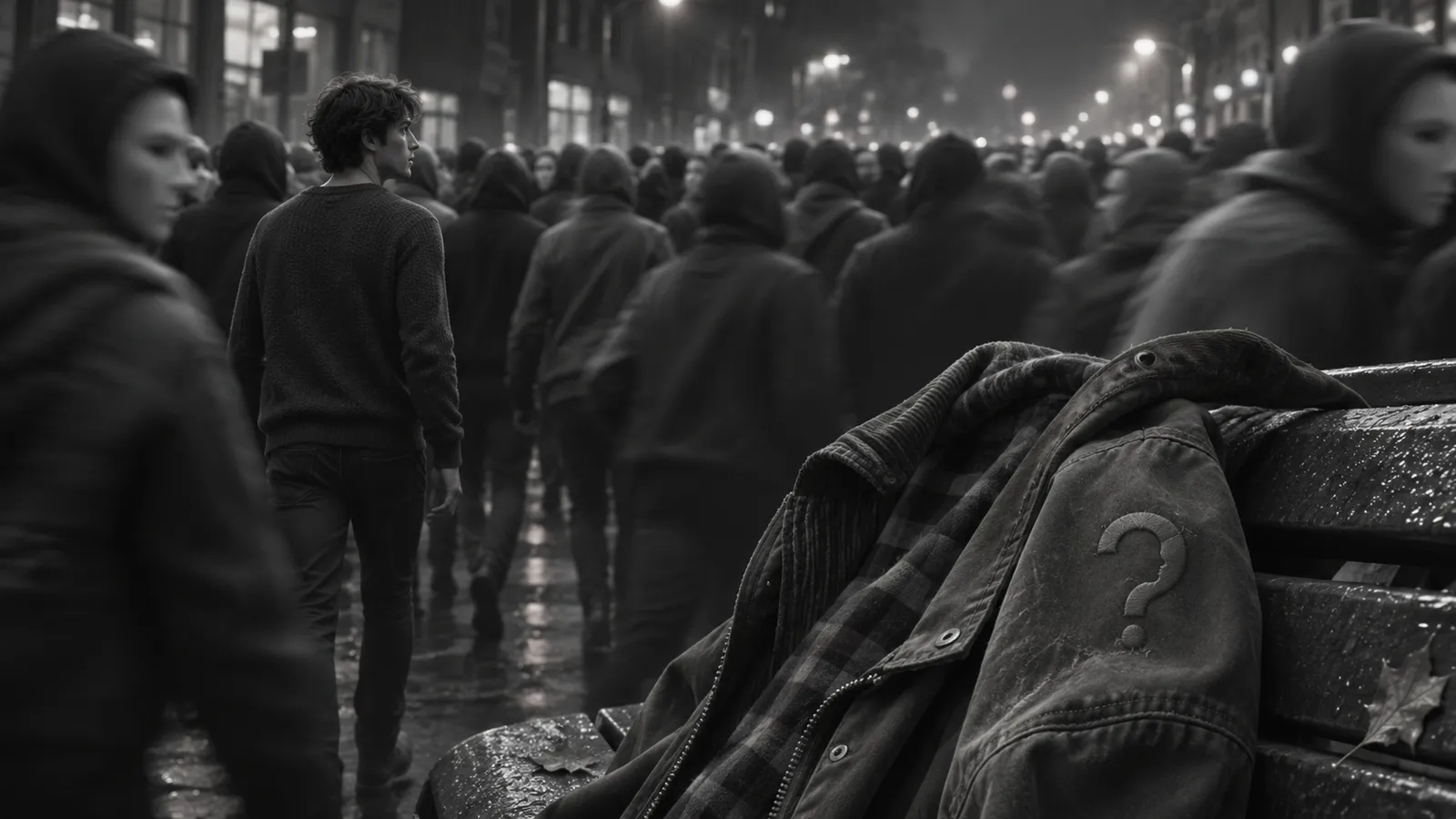
What the original idea of a lost self claimed, and what experiments on anonymity, group norms and shared identity found in its place.
Answer to the question
What is deindividuation?
Deindividuation is the state, proposed in the 1950s, in which people in a group or who cannot be identified lose self-awareness and act with less restraint. Later experiments found that anonymity makes people follow whatever norm their group makes salient, kind or careless, which is the basis of the social identity model.
Key takeaways
- Leon Festinger coined deindividuation in the 1950s for the state in which people in a group stop attending to themselves as individuals; Ed Diener later tied it to reduced objective self-awareness.
- In two studies of computer-mediated groups, anonymous groups produced solutions that matched a primed efficiency or prosocial norm, while identifiable groups did not (Postmes and colleagues, 2001).
- Visual anonymity increased group-based self-categorisation and group attraction, with no effect on the wider category of nationality (Lea, Spears and de Groot, 2001).
- The social identity model of deindividuation effects reads anonymity as a shift from individual to group identity, so behaviour follows the norm the group makes salient.
- Robert Sapolsky's Behave groups anonymity with diffusion of responsibility as conditions that loosen individual ownership of an act.
A nurse's uniform and a hooded outfit produced different levels of aggression in one well-known experiment. That contrast frames what deindividuation means: the proposed loss of a sense of oneself as an individual, which has been linked to being part of a group or to being in a setting where nobody can pick you out. The idea has been read in two quite different ways over about seventy years, and the difference between the readings is the subject of what follows.
What Did Early Deindividuation Theory Claim?
Leon Festinger coined the term in the middle of the twentieth century, and the idea drew on the nineteenth-century crowd theory of Gustave Le Bon that still lives on in everyday talk of a crowd mind. The article What is crowd mentality follows that history and the meta-analysis that tested it. Philip Zimbardo developed the theory a decade or two later, and Ed Diener tied it to reduced objective self-awareness. On that account a person who is absorbed in a group, or cannot be picked out in one, pays less attention to their own standards and is guided more by the moment. The attention-to-self side of the idea is covered in What is objective self-awareness.
The best known field test is the 1976 study by Diener, Fraser, Beaman and Kelem, who watched trick-or-treating children without their knowledge. Children took more candy and money when they were anonymous and took more when they arrived in a group, and the highest rate came from anonymous children in groups where responsibility had been shifted to one child. The result fits the original account neatly, because fewer reasons to monitor yourself meant more latitude.
The original account predicts the same thing everywhere: less identifiability, less restraint. It has a harder time with the 1979 experiment by Johnson and Downing, in which volunteers wore either a nurse's uniform or a hooded outfit during a learning task. The behaviour that followed depended on what the outfit signalled, and the nurse's uniform produced milder behaviour than the hooded one.
Does Being Unidentified Always Loosen Restraint?
Stephen Reicher, Russell Spears and Tom Postmes answered no. Their [social identity](https://thewhyweproject.com/articles/what-is-social-identity-theory) model of deindividuation effects, set out in the mid-nineties, proposes that anonymity does not remove the self. It shifts people from acting as individuals to acting as members of a group, so they follow whatever norm that group makes salient. The nurse's uniform and the hooded outfit each carried a different message about what the situation called for.
| Account | What anonymity does | What behaviour follows |
|---|---|---|
| Original deindividuation | Lowers self-awareness | Impulse and weaker restraint |
| Social identity model | Strengthens membership of the group | The norm the group makes salient |
Postmes and colleagues tested the second column directly in 2001. In two studies, people worked in groups over computers, and some members were primed with a norm, either efficiency or prosocial concern. Anonymous groups produced solutions that matched the prime, while groups whose members could be identified did not. The second study replicated the pattern and added a sharper result: unprimed members conformed to primed members, but only when the group was anonymous. The norm travelled between people and anonymity made it travel further.
The mechanism behind this was taken apart in a further study. Martin Lea, Russell Spears and Daphne de Groot, in 2001, compared groups that were visually anonymous with groups that could see one another on video, all communicating by computer. Visual anonymity increased group-based self-categorisation, meaning the sense of being a member of the group, and that raised attraction to the group, partly through seeing other members as typical of it. The effect did not extend to a wider category, nationality, so anonymity strengthened the nearest shared identity and left the distant one alone.
Spears extended the picture in a 2020 review of how group identity explains social influence. It sets the identity account beside rival explanations and treats anonymity versus visibility, and isolation versus copresence, as conditions that change how strongly a group's norms steer its members. Both conditions matter most online, where people often share a channel without sharing a room.
This is also why What is group identification and Why Do We Need to Belong sit close to the topic. If anonymity works by making a shared identity more salient, then how much a person already counts a group as part of themselves decides how far the effect goes. The belonging need supplies the pull, and visibility settings adjust how loudly it speaks.
The practical reading is that deindividuation is a mechanism with no fixed direction. It amplifies the cue the setting supplies, and a kind cue is amplified as readily as a careless one.
Where Does Deindividuation Show Up Daily?
Robert Sapolsky, in Behave, places anonymity and standardised appearance among the conditions that loosen a person's sense of individual responsibility, next to the spreading of an act across several people so that no one owns it. He also notes that city life brought a new kind of anonymous encounter, with strangers met once and never again. Diffusion of responsibility and deindividuation are therefore close relatives, and both describe a drop in felt personal ownership of what happens.
Our view is that the research turns a worry into a design question. Asking whether people in a setting are identifiable gives a partial answer. The more useful question is which norm the setting makes visible and whether people share an identity around it. A team that wears a common uniform, a forum that posts its purpose at the top, and a queue with clear signs are all supplying a cue, and anonymous members are likely to lean towards it. Where no cue is supplied, the group's own habits fill the space, and those are harder to predict.
For a reader, the lesson is modest and usable. Deindividuation is not a switch that turns off judgement. It changes whose standards a person attends to, and the setting decides which standards are on display.
Common questions
What is deindividuation?
Deindividuation is the state in which people in a group, or who cannot be identified, lose self-awareness and act with less restraint. Later research found anonymity makes people follow whatever norm their group makes salient.
Does deindividuation always loosen restraint?
No. Experiments found anonymity can raise adherence to a prosocial or efficiency norm as readily as a careless one, depending on the cue the setting supplies.
How is deindividuation different from crowd mentality?
Crowd mentality is the popular idea of one crowd mind. Deindividuation is the research term for the proposed loss of self, and the social identity model explains the effects through group norms instead.
Sources
Sapolsky, R. Behave. Seed book; vault hub Books/Behave.
Britannica. Deindividuation. https://www.britannica.com/topic/deindividuation
Postmes, T., Spears, R., Sakhel, K., & de Groot, D. (2001). Social influence in computer-mediated communication: The effects of anonymity on group behavior. Personality and Social Psychology Bulletin, 27(10), 1243-1254. doi:10.1177/01461672012710001 https://doi.org/10.1177/01461672012710001
Lea, M., Spears, R., & de Groot, D. (2001). Knowing me, knowing you: Anonymity effects on social identity processes within groups. Personality and Social Psychology Bulletin, 27(5), 526-537. doi:10.1177/0146167201275002 https://doi.org/10.1177/0146167201275002
Spears, R. (2021). Social influence and group identity. Annual Review of Psychology, 72, 367-390. doi:10.1146/annurev-psych-070620-111818 https://doi.org/10.1146/annurev-psych-070620-111818