Why You Lie Awake at 3am Replaying One Conversation
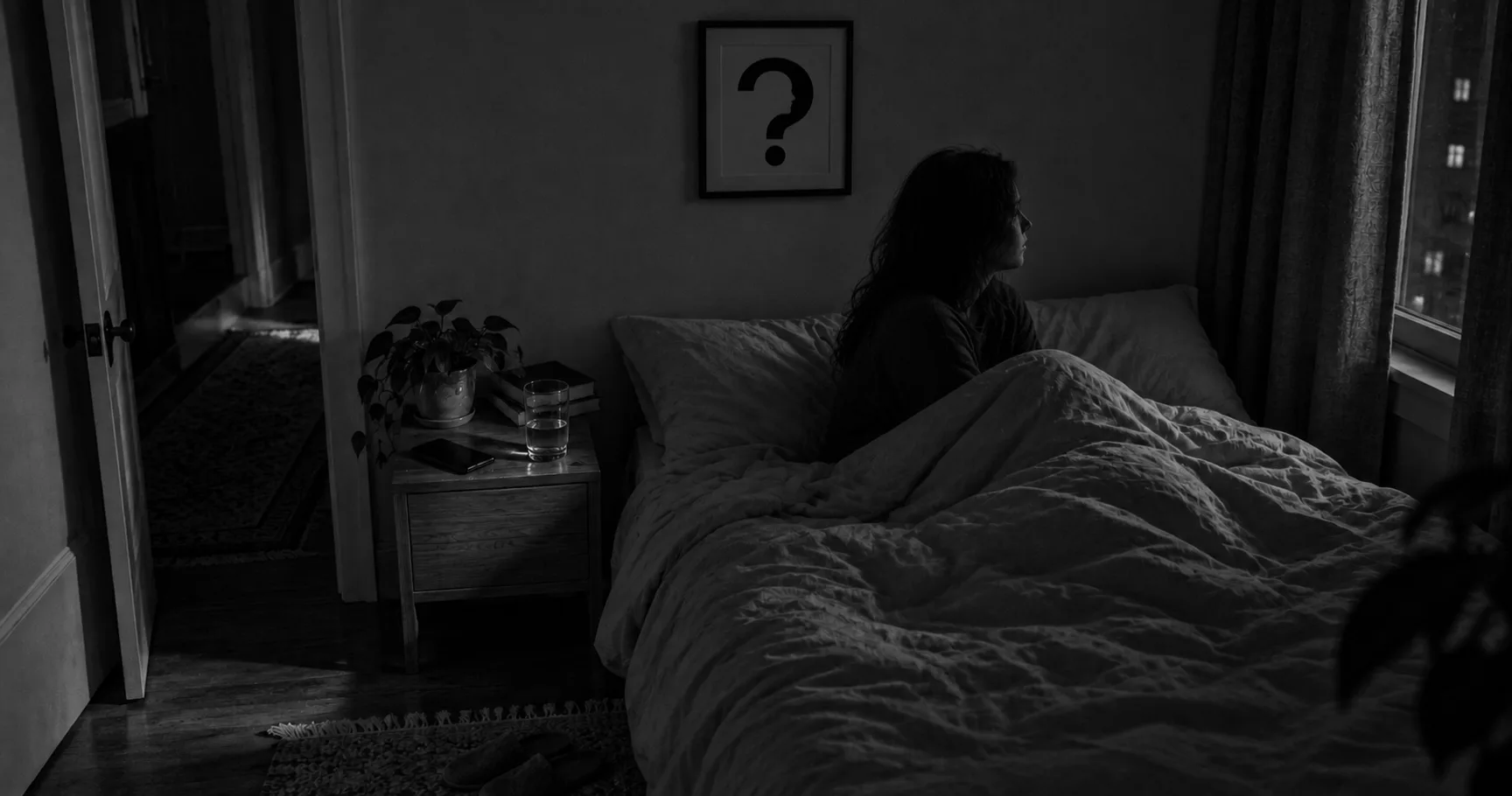
The hour is folklore. The night is real, and what it does to a thought that will not stop has been measured better than most people realise
#psychology #sleep
X pull-tweet
Standalone post, not part of the thread. Post separately, the day after.
Nobody has found a rumination spike at 3am, and nobody has shown that three differs from two or from four. What has been measured is the evening, and the fact that at three in the morning there is nothing left competing for your attention.
Caption for the hero image, link in bio. Fifteen hashtags in the FIRST COMMENT, lowercase, never in the caption.
There is no evidence that 3am is special.
That is the first thing our new piece says, and it has 3am in the title. Nobody has found a rumination spike at three in the morning. Nobody has shown that three differs from two or from four. The specificity is cultural.
The night is a different matter.
Keisuke Takano and Yoshihiko Tanno pinged people eight times a day for a week and asked what they were thinking about. The pattern was U-shaped: high in the morning, lowest in mid-afternoon, climbing again in the evening. And the evening climb was steeper in people with higher depression scores.
What the small hours take away is competition. In the afternoon a replay of that conversation has to fight a screen, a colleague, a queue, a deadline. At three it has the room to itself, and nothing it raises can be acted on.
Two more things from the piece.
Rumination is not one thing. In 2003 a community sample of 1,328 people produced two separate habits out of ten questions: brooding, which asks why do I always react this way, and reflective pondering, which asks what happened and what would I do next time. Only the first predicted more severe depression over time, and even that split could not be found in people who were currently depressed.
And the sleep advice everybody has already been given, no screens, cool room, no late caffeine, has no demonstrated efficacy as a stand-alone treatment for long-running insomnia.
The hour is folklore. The night is real.
The Why We Project. Link in bio: thewhyweproject.com/articles/why-you-lie-awake-at-3am
First comment:
#psychology #sleep #rumination #overthinking #behaviouralscience #sleepscience #mentalhealth #insomnia #cognitivescience #evidencebased #sciencecommunication #psychologyfacts #nighttime #selfawareness #whyweproject
Threads
Single post, written natively. Shorter and more conversational than the Instagram caption, no hashtag block.
We wrote a piece with 3am in the title and the first thing it says is that there is no evidence 3am is special. Nobody has found a spike at three, and nobody has shown that three differs from two or four.
What has been measured is the evening. Pinged eight times a day for a week, people's self-focused unpleasant thinking sat high in the morning, dipped lowest mid-afternoon, and climbed again at night.
The night's real advantage is that nothing else is competing. In the afternoon that replay has to fight a screen, a queue, a deadline. At three it has the room to itself.
The hour is folklore. The night is real.
https://thewhyweproject.com/articles/why-you-lie-awake-at-3am
········································
THE WHY WE PROJECT · WHY WE CARE · ARTICLE 16
Key takeaways
- There is a genuine evening climb in this kind of thinking, found by Takano and Tanno in 2011 by pinging people eight times a day for a week, and no evidence at all that three in the morning differs from two or four. The hour is cultural. The night is the real thing.
- The distinction that matters is between brooding, which asks why this is happening to you, and reflective pondering, which asks what happened and what you would do differently. Treynor and colleagues pulled the two apart in 2003 in a community sample of 1,328 people, and only brooding predicted worse depression over time.
- That split is better established for brooding than for reflection, and a 2011 re-examination could not find the structure at all in people who were currently depressed, so it describes two different mental moves rather than offering a swap you can perform at 3am.
- The idea that your subconscious is processing the problem overnight has no research basis, and the evidence runs the other way: the authoritative review of rumination reports that it impairs problem solving rather than aiding it.
- Sleep hygiene, the advice almost everyone has already been given, has no demonstrated efficacy as a stand-alone treatment for long-running insomnia. It is recommended alongside the techniques that do have evidence, not instead of them.
- Overthinking is not a symptom of anxiety. Ehring and Watkins established repetitive negative thinking as a process that runs across depression, generalised anxiety, obsessive-compulsive disorder and post-traumatic stress, and in people with no condition at all.
Ping somebody eight times a day for a week and ask what is on their mind, and a shape comes out of the answers. Keisuke Takano and Yoshihiko Tanno did that in 2011, at semi-random intervals, asking what people were thinking about and how they felt. The curve came out U-shaped: self-focused, unpleasant, uncontrollable thought sat high in the morning, dipped lowest in mid-afternoon, and climbed again in the evening. And people with higher depression scores ruminated more in the evening specifically, not in the morning.
Take the limits with it. Everything in that study is self-reported, which is the standing problem with this whole literature, and it covers waking hours only. The evening climb is real. It does not reach three in the morning, and no study located for this piece carries it that far.
The hour is doing nothing to you. Nobody has found a spike in this kind of thinking at three in the morning, and nobody has shown that three differs from two or from four. The specificity is cultural, the way the witching hour is cultural. We say 3am because the phrase is available.
The night is another matter. What the small hours take away is competition. In the afternoon the replay, the one where you finally say the thing you should have said and it lands and they have no answer, has to fight a screen, a colleague, a queue, a child, a deadline. By three you have run that version eleven times, each one slightly better written than the last. At three it has the room to itself, nothing it raises can be acted on, and the body clock is at its lowest ebb. The thought is not louder. Everything else has gone quiet.
So the churning is not a fault in you. It is what an unoccupied mind does with an unresolved thing, at the worst hour to be doing it.
Related concepts
- The Self-Report Problem
- Stimulus Control
- Brooding
- Sleep Hygiene
- Rumination
- Insomnia Disorder
- Reflective Pondering
- Repetitive Negative Thinking
- Rumination-Focused CBT
- Pre-Sleep Cognitive Arousal
- Sleep Onset Latency
- Constructive Worry
- Expressive Writing
- Cognitive Behavioural Therapy for Insomnia
- Diurnal Variation in Rumination
- Behavioural Activation
- Response Styles Theory