Does Yellow Really Make People Hungry
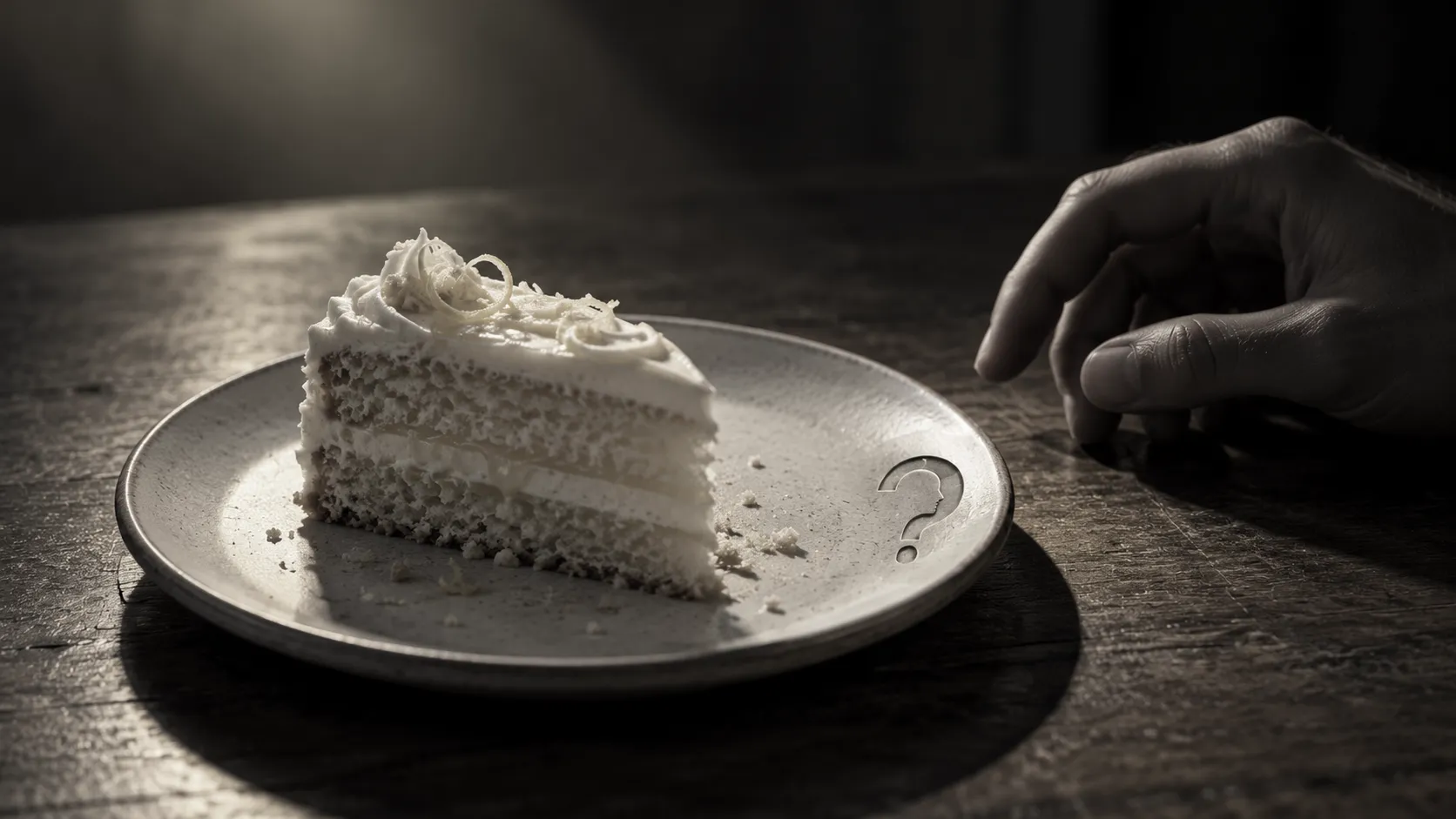
Fast-food signage is often explained with a sentence about yellow and appetite. The experiments that come closest used red, blue and tinted food pictures, and they gave mixed results. Where a colour does stir hunger, the likelier route is a learned link to food, which would vary by person and place, rather than the hue acting on appetite directly.
Answer to the question
Does yellow really make people hungry?
Not on the evidence cited here. Experiments with red, blue and tinted food pictures gave mixed results, and the one study that lit meals with yellow reported its effect under blue light. Where a colour could raise appetite, the likelier route is a learned link to food, which would vary by person and place, rather than the hue acting on hunger directly.
Key takeaways
- Schlintl and Schienle (2020) showed 448 women food pictures in original colours and tinted red, blue and black and white: the tinted versions were wanted less than the originals, and coloured backgrounds changed nothing.
- Genschow, Reutner and Wänke (2012) reported that people drank less from a red labelled cup and ate less from a red plate than from blue or white ones, and Reutner and colleagues (2015) found the reduction larger for unhealthy food.
- Cho, Seo and colleagues (2015) fed 112 adults breakfast under white, yellow or blue light; the abstract reports men eating less under blue than under yellow or white, with no separate result for yellow.
- Schloss, Witzel and colleagues (2020) found that effects ascribed to a hue often follow its lightness and saturation, and yellow alone can be light and saturated at once.
- Weingarten (1983) showed that sated rats ate when a cue paired with food appeared and ate less later, which makes a learned link to food the likelier route for any yellow appetite.
Photographs of sweet foods appeared on screens at the University of Graz, each in its own colours and again in red, blue and black and white, and a group of women rated how much they wanted to eat the food right now. Yellow was not among the tints. It is nonetheless the colour the popular question is about: the belief, usually told with red beside it, that yellow makes people hungry.
The nearest evidence concerns the other colours, and it is mixed. Carina Schlintl and Anne Schienle, who ran the Graz work and published it in 2020, found that the tinted pictures were wanted less than the originals. Half the women had been told beforehand that red raises appetite and blue suppresses it. The red pictures drew the same ratings with or without that suggestion, and the blue and black-and-white pictures were wanted less after it. A second experiment, with 231 women, put the food on red, blue, grey and white backgrounds, and the backgrounds changed nothing. Both experiments measured self-rated wanting, not eating.
Red has been tested, and it disagrees with itself
Red has a longer record, and it points in more than one direction. In a 2012 paper, "The color red reduces snack food and soft drink intake", Oliver Genschow, Leonie Reutner and Michaela Wänke reported that people drank less from a red labelled cup than from a blue one, and ate less snack food from a red plate than from a blue or white plate. They read red as a subtle stop signal.
Reutner, Genschow and Wänke followed it in 2015 with a study in which red lowered the amount of unhealthy food eaten more than it lowered healthier choices, and they read that as an adaptive response rather than a general one. The Graz authors describe the findings on red raising appetite and blue lowering it as inconsistent.
Lighting has been tried as well, and that experiment did include yellow. Sungeun Cho, Han-Seok Seo and colleagues reported in 2015 that blue lighting decreased the amount of food consumed in men, but not in women. The abstract describes 112 participants, 62 men and 50 women, eating a breakfast of omelettes and mini pancakes under white, yellow or blue lighting.
Blue lighting cut the amount eaten by men compared with the yellow and white conditions, and it lowered how appealing the food looked without lowering willingness to eat. The abstract reports no result that sets yellow apart from white.
| Study | Colour | What was measured | Reported result |
|---|---|---|---|
| Genschow et al., 2012 | Red | Snack food and soft drink intake | Intake reduced |
| Reutner et al., 2015 | Red | Intake of unhealthy and healthier food | Larger reduction for unhealthy food |
| Cho et al., 2015 | Blue, white and yellow lighting | Amount of food consumed | Lower under blue in men, not in women |
| Schlintl and Schienle, 2020 | Red, blue, black and white | Self-rated wanting, 448 women | Tinted pictures wanted less than the originals |
Yellow appears only once in the four, as a comparison light beside white, and the reduced eating was under blue. The studies show that the red half of the story, the half meant to carry the argument, cannot be taken for granted, and that where colour moved anything the movement depended on who was looking and on what the food was.
Colour claims have outrun their tests before, and the seed for this piece, Adam Alter's Drunk Tank Pink, is the standing example. The book takes its title from Baker-Miller pink, and Alter's own endnote concedes that its originator, Alexander Schauss, kept testing the effect, "sometimes but not always finding support" (p. 229). The book also belongs to the social-priming literature, much of which did not survive replication, so it serves here as the cautionary case and supplies no evidence about yellow. The pink story is told in full in [What the Pink Cell Never Proved](https://thewhyweproject.com/articles/does-pink-really-calm-people-down).
Which yellow, and measured against what
That describes a prediction about flavour, which is a different thing from how hungry a person is.
The word covers a family of colours. Karen Schloss, Christoph Witzel and colleagues showed in 2020 that effects ascribed to a hue often follow its lightness and saturation instead: with those held constant, blue hues were no sadder than yellow ones. Their own caveat is that yellows keep the greatest potential to look happiest, because only yellow can be light and saturated at once. A pale lemon, a mustard, a butter and a school-bus yellow differ on both dimensions, and a claim about the hue that names none of them cannot be checked.
Where colour does shape eating, the route runs through expectation. Charles Spence's 2015 review in Flavour concludes that colour is probably the most influential product-intrinsic cue for predicting how food and drink will taste. Changing a food's hue, intensity or saturation shifts what people expect, and a mismatch between colour and taste can produce a negative reaction. That describes a prediction about flavour, which is a different thing from how hungry a person is. The wider theory that a colour means what its setting makes it mean is set out in [What Red Actually Does](https://thewhyweproject.com/articles/what-red-actually-does), and the coffee-cup version of the expectation point is in [Why Your Coffee Tastes Different in a White Cup](https://thewhyweproject.com/articles/why-your-coffee-tastes-different-in-a-white-cup).
A learned cue is the likelier route
A route from a colour to appetite does exist in principle, and it runs through learning, a mechanism called conditioned hunger. In 1983 Harvey Weingarten showed that rats already fed to satiety ate when a cue that had been paired with food was presented, and that they ate less afterwards, so the cue moved the timing of eating more than the total.
The same mechanism is set out for time of day and place in [Why You Are Hungry an Hour After a Big Lunch](https://thewhyweproject.com/articles/why-you-are-hungry-after-a-big-lunch).
Applied to yellow, the reading is ours and has not been tested: a colour that has reliably come before food, on a chain's sign or a biscuit packet, could start the eating in people who learned it and not in people who did not. Spence notes that what a food colour means differs across ages and cultures, so the same yellow would be a cue in one place and an ordinary colour in another, which is the pattern a learned account expects and one that an account built on wavelength, in which a single hue would act in the same way on everyone, has no reason to predict.
Common questions
Does yellow really make people hungry?
The experiments cited here did not show it. Studies of red food, blue lighting and tinted food pictures gave mixed results, and in the one lighting study that included yellow light, the abstract places the reduced eating under blue. In the 2020 Graz experiment tinted food pictures were wanted less than the originals.
Why do fast-food chains use yellow?
The studies reviewed here do not say. The popular explanation, that yellow stimulates appetite, has not been shown in the experiments above, and a learned association between a colour and food is a more defensible reading.
Does the exact shade of yellow matter?
It may. Schloss, Witzel and colleagues found that effects attributed to hue often track lightness and saturation, and yellow is the one hue that can be both light and saturated, so a pale lemon and a mustard are different stimuli.
Sources
Schlintl, C., & Schienle, A. (2020). 'Effects of coloring food images on the propensity to eat: a placebo approach with color suggestions.' Frontiers in Psychology, 11, 589826. doi:10.3389/fpsyg.2020.589826
Genschow, O., Reutner, L., & Wänke, M. (2012). 'The color red reduces snack food and soft drink intake.' Appetite, 58(2), 699-702. doi:10.1016/j.appet.2011.12.023
Reutner, L., Genschow, O., & Wänke, M. (2015). 'The adaptive eater: Perceived healthiness moderates the effect of the color red on consumption.' Food Quality and Preference, 44, 172-178. doi:10.1016/j.foodqual.2015.04.016
Cho, S., Han, A., Taylor, M. H., Huck, A. C., Mishler, A. M., Mattal, K. L., Barker, C. A., & Seo, H.-S. (2015). 'Blue lighting decreases the amount of food consumed in men, but not in women.' Appetite, 85, 111-117. doi:10.1016/j.appet.2014.11.020
Schloss, K. B., Witzel, C., & Lai, L. Y. (2020). 'Blue hues don't bring the blues: questioning conventional notions of color-emotion associations.' Journal of the Optical Society of America A, 37(5), 813-824. doi:10.1364/JOSAA.383588
Spence, C. (2015). 'On the psychological impact of food colour.' Flavour, 4, 21. doi:10.1186/s13411-015-0031-3
Weingarten, H. P. (1983). 'Conditioned cues elicit feeding in sated rats: a role for learning in meal initiation.' Science, 220(4595), 431-433. doi:10.1126/science.6836286
Alter, A. (2013). Drunk Tank Pink: And Other Unexpected Forces That Shape How We Think, Feel, and Behave. Penguin Press (endnote, p. 229).