Why We Give Chatbots a Name
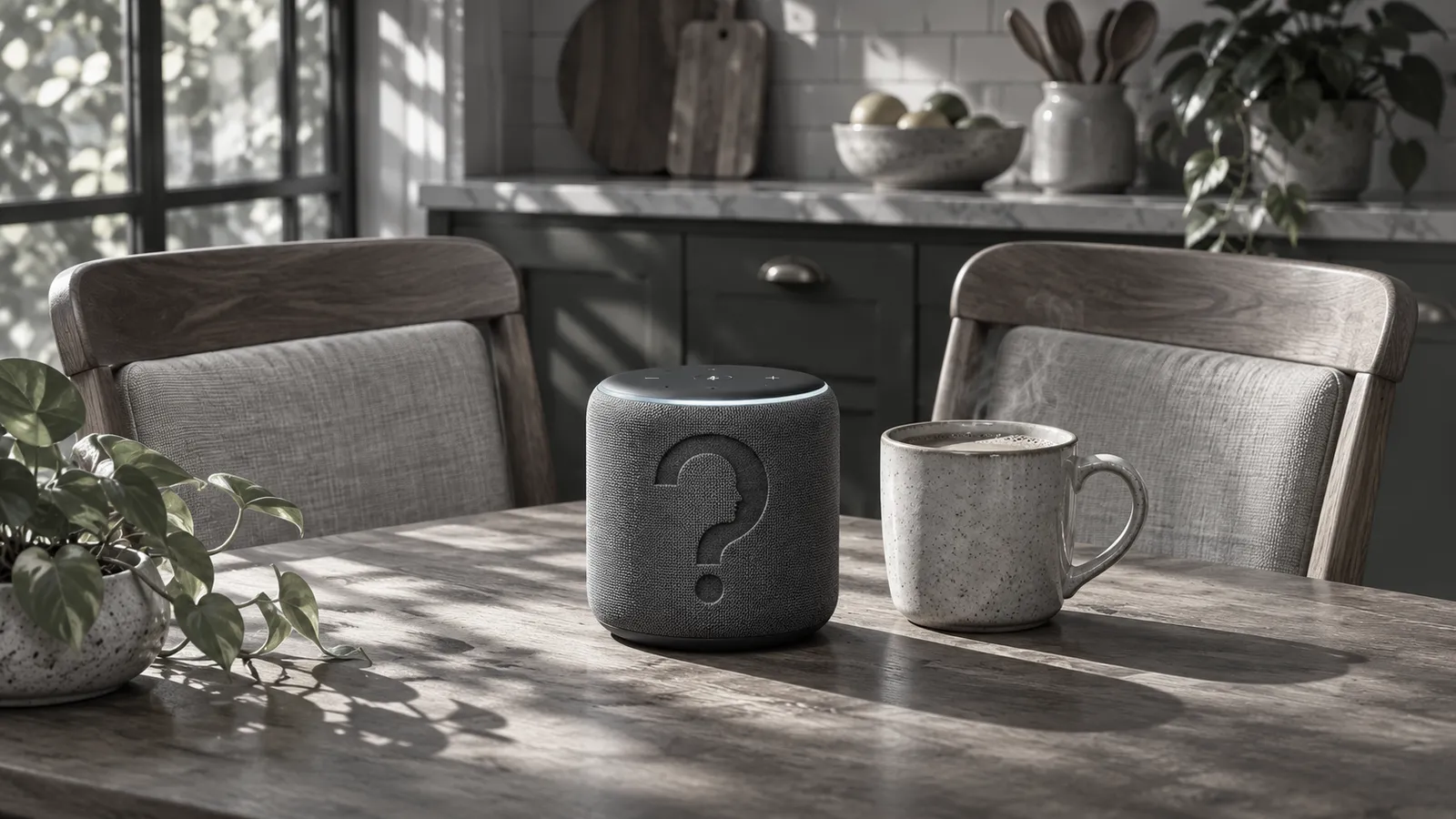
A name, plain wording and a voice are small signals, and the research shows how readily they start social habits. The effect depends on the person, the cues and how the agent is introduced.
Why do people treat chatbots like people?
People treat chatbots like people because of anthropomorphism: a name, conversational wording and a voice supply cues that make it easy to attribute a humanlike mind, and social habits then run automatically. Studies find these cues raise perceived humanness and trust, and that how an agent is introduced and how it behaves after a fault change the effect.
Key takeaways
- In 2007, Epley, Waytz and Cacioppo proposed that people attribute humanlike minds more readily when humanlike knowledge fits the agent, when they want to understand it and when they lack social connection to other people.
- Experiments reviewed by Nass and Moon in 2000 found people applying politeness, reciprocity and other social rules to computers, which the authors described as automatic.
- In a 2018 chat experiment with 175 people, humanlike wording, a first name and greetings raised perceived humanness, and the effect on social presence depended on how the agent was introduced (Araujo, 2018).
- Across four experiments, hearing a speaker's thoughts conveyed more mind than reading the same words (Schroeder and Epley, 2016).
- In a driving simulator with 100 people, a self-driving car given a name, a gender and a voice drew the highest trust on behavioural measures (Waytz and colleagues, 2014).
A name on a chat window answers a question before anyone asks it: is someone there? Anthropomorphism, the attribution of humanlike traits, intentions and feelings to nonhuman agents, is the research term for that answer. It rises and falls with how an agent is built, how it is introduced and what the person using it needs at the time.
Nicholas Carr, in The Shallows, describes a 1960s program called ELIZA that matched words in a typed sentence and handed them back as a question. Its creator, Joseph Weizenbaum, found that people confided in it while knowing exactly how little it did. Carr's reading is that the Turing test measures human willingness to anthropomorphise at least as much as it measures machine intelligence, and the studies below place much of the weight on the person and the cues.
Which conditions raise the tendency?
Nicholas Epley, Adam Waytz and John Cacioppo proposed in 2007 that anthropomorphism can be predicted. People are more likely to attribute a humanlike mind when knowledge about humans comes to mind easily and fits the thing in front of them, when they want to understand and explain what an agent will do, and when they lack a sense of connection to other people. The theory of anthropomorphism was written to organise findings across many fields and to generate predictions about differences between people, situations, ages and cultures, and it names robotics and human-computer interaction as places to apply it.
Set beside a chat window, the three conditions meet ordinary design choices.
| Condition in the theory | What a chat window can supply |
|---|---|
| Humanlike knowledge is accessible and fits the agent | A first name, full sentences, first-person replies, greetings |
| A wish to understand and predict the agent | Answers that vary and cannot be fully anticipated |
| A wish for social contact | A responsive partner at any hour |
The first row is the one a designer controls most directly, and it is the one the experiments below manipulated. A name and a greeting draw on it before the user has typed a word. The other two sit with the user: how unpredictable the system seems, and how much human contact the person has at that moment.
Why do social rules apply unprompted?
Clifford Nass and Youngme Moon reviewed a series of experiments in 2000 in which people applied social rules and expectations to computers. Participants showed politeness and reciprocity toward machines, responded to them as though they had a personality, and carried over categories and stereotypes that belong to relations between people. The authors argued that these responses were mindless, set off automatically by a few social cues, and that alternative explanations, among them anthropomorphism and deliberate social responding, could not account for them.
A chat window delivers the cues those experiments used, and so the conditions for anthropomorphism: wording, turn-taking and replies addressed to the person who typed them. The pattern has a relative in the one-sided bonds viewers form with people on screen, covered in What is a parasocial relationship, with one difference in design: a chatbot replies to what the person says.
Which cues drive anthropomorphism?
Theo Araujo tested the cues directly in 2018. In a two-by-two experiment, 175 people used a chat window to change the delivery address on a fictitious order within three minutes, a short practical errand of the kind a service chat handles every day. The agent either wrote informally, carried a human first name and opened and closed with greetings, or wrote in formal computer-style language and used commands. Half of the participants were told they were dealing with artificial intelligence and half were given a neutral description. Araujo measured a mindless and a mindful form of anthropomorphism separately, which keeps both accounts in view.
The cues alone did not change how present the agent felt. Social presence differed only in combination with the introduction: under the artificial intelligence description, the humanlike agent was rated higher than the machine-like one, and the machine-like agent was rated lower than it was under the neutral description. Perceived humanness was higher for the humanlike agent.
Satisfaction and attitude toward the company did not differ between conditions, while emotional connection with the company was higher with humanlike cues, with social presence as the only significant mediator. The same words can pull the other way in other settings: in the dress experiment described in What an AI Label Does to a Product, the AI caption lowered how far shoppers would use a dress to express themselves.
Voice was the cue tested by Juliana Schroeder and Nicholas Epley in 2016. Across four experiments, people who heard a speaker's thoughts inferred more mind than people who read the same words. Text alone made the creator of the text seem more like a machine, and adding computer-generated speech made the creator seem more human. Visual cues did not produce the effect, and removing the natural qualities of speech removed it. A spoken interface supplies that cue by design, which makes it a route to anthropomorphism. Faces on cars and phones start the same attribution through sight, as Why We See Faces in Products sets out; wording and voice start it through language.
What happens to trust?
Anthropomorphism matters most where it changes what people rely on. Adam Waytz, Joy Heafner and Nicholas Epley asked in 2014 whether a humanlike mind raises trust in an agent's competence. One hundred people in a driving simulator were randomly given a normal car, a self-driving car, or the same self-driving car with a name, a gender and a human voice. The third car was rated as having the most humanlike mind. Trust rose from the normal car to the self-driving car to the self-driving car with a name and voice, across behavioural, physiological and self-report measures, although the self-report ratings alone did not separate the two self-driving cars.
Ewart de Visser and colleagues looked at what happens to trust after an automated agent makes mistakes. Trust in humanlike agents recovered better after a breakdown than trust in less humanlike agents, and the advantage grew when uncertainty was higher. When the agents also used humanlike trust repair behaviours, the difference between the two kinds largely disappeared.
What the studies point to is practical. The cues in a window set how far the tendency goes. How an agent is introduced shifted ratings only alongside those cues, and what an agent does after a fault narrowed the trust gap between the two kinds of design. Noticing which cues a chat window carries needs no change to the product, and it names the condition in the theory that the window itself supplies.
Common questions
Why do people treat chatbots like people?
Anthropomorphism, the attribution of humanlike traits and intentions to nonhuman agents, rises when humanlike knowledge fits the agent, when people want to understand it and when they lack social connection. A chat window supplies cues such as a name, conversational wording and in some cases a voice, and studies find these raise perceived humanness and trust.
What is anthropomorphism?
It is the tendency to attribute humanlike traits, motivations, intentions or emotions to real or imagined nonhuman agents. A 2007 theory by Epley, Waytz and Cacioppo ties it to three conditions: humanlike knowledge that is accessible and fits, a wish to understand the agent, and a wish for social contact.
Does a human name change how people see a chatbot?
In a 2018 experiment with 175 people, an agent with an informal style, a human first name and greetings was perceived as more humanlike, and its users reported more emotional connection with the company, while satisfaction and attitude toward the company did not differ. How the agent was introduced changed ratings of social presence.
Sources
Carr, N. The Shallows. Seed book.
Epley, N., Waytz, A., & Cacioppo, J. T. (2007). On seeing human: A three-factor theory of anthropomorphism. Psychological Review, 114(4), 864-886. doi:10.1037/0033-295X.114.4.864 https://doi.org/10.1037/0033-295X.114.4.864
Nass, C., & Moon, Y. (2000). Machines and mindlessness: Social responses to computers. Journal of Social Issues, 56(1), 81-103. doi:10.1111/0022-4537.00153 https://doi.org/10.1111/0022-4537.00153
Araujo, T. (2018). Living up to the chatbot hype: The influence of anthropomorphic design cues and communicative agency framing on conversational agent and company perceptions. Computers in Human Behavior, 85, 183-189. doi:10.1016/j.chb.2018.03.051 https://doi.org/10.1016/j.chb.2018.03.051
Schroeder, J., & Epley, N. (2016). Mistaking minds and machines: How speech affects dehumanization and anthropomorphism. Journal of Experimental Psychology: General, 145(11), 1427-1437. doi:10.1037/xge0000214 https://doi.org/10.1037/xge0000214
Waytz, A., Heafner, J., & Epley, N. (2014). The mind in the machine: Anthropomorphism increases trust in an autonomous vehicle. Journal of Experimental Social Psychology, 52, 113-117. doi:10.1016/j.jesp.2014.01.005 https://doi.org/10.1016/j.jesp.2014.01.005
de Visser, E. J., Monfort, S. S., McKendrick, R., Smith, M. A. B., McKnight, P. E., Krueger, F., & Parasuraman, R. (2016). Almost human: Anthropomorphism increases trust resilience in cognitive agents. Journal of Experimental Psychology: Applied, 22(3), 331-349. doi:10.1037/xap0000092 https://doi.org/10.1037/xap0000092
Related concepts
People
More articles
- Why Rolling the Dice Yourself Feels Luckier
A die lands the same way whoever throws it, yet people prefer to throw it themselves. The research on the illusion of control shows how acting and planning raise the sense of influence, and what…
- Why Giving Money Away Feels Better Than Spending It
People predict that a windfall spent on themselves would please them most. Studies of prosocial spending find the reverse in many settings, and the largest replications show where the effect weakens.
- Why We Order the Same Lunch Every Day
A lunch plan made on Sunday and a lunch ordered on Thursday are different choices. Studies of variety-seeking behaviour show how timing, audience and memory pull between variety and routine.
- Why the Urgent Task Beats the Important One
A larger reward with no deadline lost to a smaller one that looked about to expire. The research on the mere urgency effect shows how a clock can decide which task gets done.
In these themes
- AI and Human Judgement
When we trust machines, when we resist them, and why.